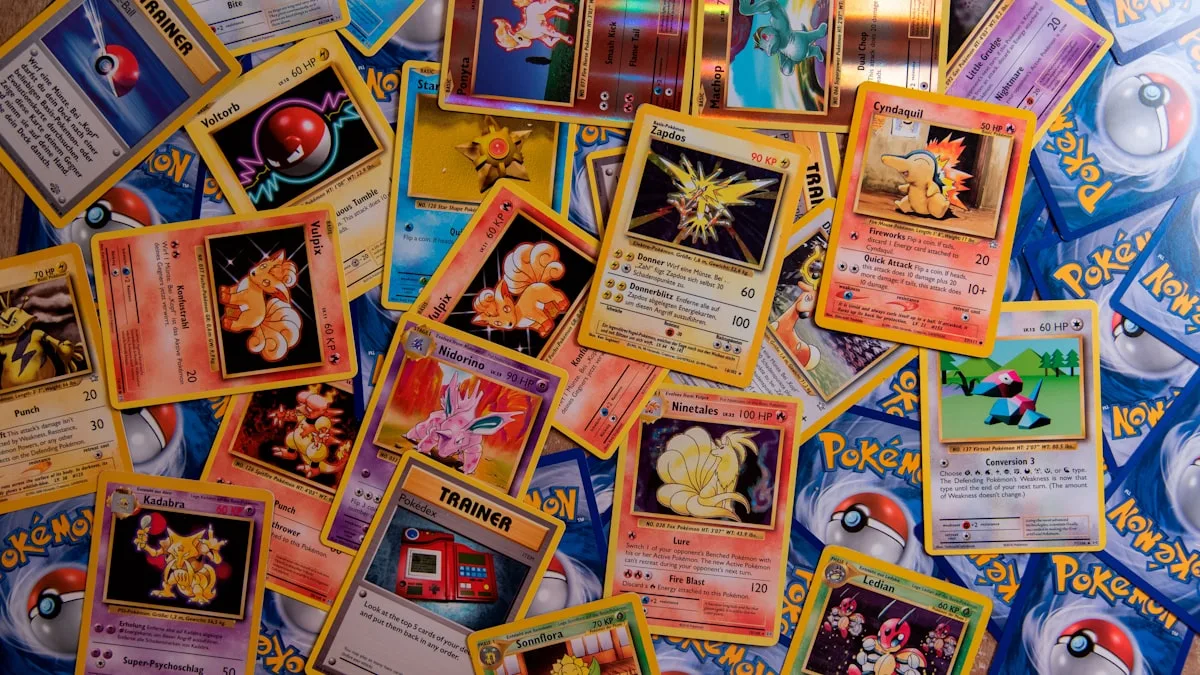
Pokemon Card Investment Guide: Best Cards to Buy in 2026
The Pokemon card market has evolved dramatically over the past few years. What was once a nostalgic hobby has transformed into a legitimate investment vehicle, with serious collectors and resellers treating pokemon card investment with the same rigor as traditional assets. If you're looking to build wealth through strategic card acquisition, you need to understand what separates winning investments from money-losing mistakes.
In 2026, the landscape is more sophisticated than ever. Grading standards have tightened, market saturation has increased, and casual buyers have largely exited the space. This is actually good news for you—it means the remaining market is dominated by informed investors who understand true value. This guide will equip you with the knowledge you need to make smart pokemon card investment decisions that generate real returns.
Understanding the Pokemon Card Investment Market in 2026
Before you spend a single dollar on cards, you need to understand how the market actually works. The Pokemon TCG market has matured significantly since the pandemic-driven boom of 2020-2021. Back then, any vintage card seemed to appreciate. Today, only specific cards with genuine scarcity and collector demand hold or increase in value.
The key insight: not all Pokemon cards are investments. Mass-produced modern sets hold value poorly. Your pokemon card investment strategy must focus on:
Set up a Pokemon Cards alert on Good Llama
Get verified eBay alerts — 7-day free trial.
- Vintage cards (Base Set through Neo era) with strong demand
- First editions and shadowless variants that command premiums
- High-grade specimens certified by PSA, BGS, or CGC
- Low population counts that suggest genuine scarcity
- Character-driven demand (Charizard, Blastoise, Venusaur remain perpetually popular)
The difference between a card that appreciates 15% annually and one that loses value comes down to understanding these fundamentals. Most casual collectors miss this and wonder why their 2022 booster box purchases are worth 40% less today.
The Best Pokemon Cards to Buy for Investment Returns
Your pokemon card investment portfolio should include a mix of proven winners and calculated bets. Here are the categories that consistently generate returns:
Base Set First Editions
Base Set first edition cards remain the gold standard of Pokemon card collecting. The 1999 Pokemon TCG Base Set has defined scarcity—print runs were limited, and decades of card deterioration means high-grade specimens are genuinely rare.
Focus on:
- Charizard (Holo) - The most sought-after card. Even damaged copies command $500+. PSA 8-9 specimens range from $8,000-$15,000.
- Blastoise (Holo) - The second-most valuable Base Set card, with similar grading-dependent pricing.
- Venusaur (Holo) - Completes the trio and holds strong demand among set-builders.
The reason these cards appreciate: finite supply, universal collector appeal, and proven demand across multiple generations of players. A PSA 9 Base Set Charizard first edition purchased at $10,000 in 2023 might fetch $12,000-$14,000 today. That's 4-8% annual appreciation—solid returns for an asset you can hold physically.
Shadowless Cards and Error Cards
Shadowless cards (printed before the drop shadow effect was added to card borders) command premiums because they're rarer than first editions in many cases. Similarly, misprint cards create collector intrigue and scarcity value.
These are ideal for pokemon card investment because:
- Fewer collectors understand the difference, creating arbitrage opportunities
- Print runs were even smaller than first editions
- Dedicated hobbyists actively seek them out, creating consistent demand
A shadowless Base Set Machop might cost $400-$600 but rarely appreciates faster than 3-4% annually. Compare that to a shadowless Charizard at $20,000+—when these cards move, they move significantly.
Tournament-Promo and Limited-Edition Cards
Tournament promos, Japanese exclusive cards, and cards with genuine production limitations create scarcity through collection completeness rather than age. Serious collectors want to own every variant, which creates persistent demand.
Examples include:
- Japanese trophy cards from official tournaments
- Birthday Pikachu promos (extremely limited)
- Crown Collection boxes with exclusive holo stamps
- Southern Islands promos (1999-2000, limited release)
These cards often appreciate 6-10% annually because they serve multiple collector motivations simultaneously.
Grading Strategy: The Make-or-Break Decision
Here's the truth about pokemon card investment that most beginners miss: a raw card (ungraded) and a graded card of the same card can have 300% price differences.
A raw PSA 7-equivalent card might sell for $2,000. That same card, graded PSA 7, might fetch $6,000. The grading slab adds perceived legitimacy, investment-grade presentation, and liquidity.
However, grading is expensive. PSA charges $20-$100+ per card depending on service level. You should only grade cards that meet these criteria:
- High-value cards (potentially worth $500+) where grading justifies the cost
- Pristine condition cards with realistic PSA 7+ potential
- Cards with proven market demand where grading adds 150%+ value
Don't grade bulk inventory or modern commons. Do grade your key investments. The difference between selling a PSA 8 Charizard and an ungraded Charizard is often $5,000+. That's worth the grading fee.
Timing Your Purchases and Managing Market Volatility
Pokemon card investment success depends partly on timing. The market experiences seasonal fluctuations:
- November-December: Peak buying season. Prices increase 5-15% as holiday demand peaks.
- January-March: Post-holiday correction. Prices dip 10-20% as supply floods the market.
- Summer: Slower period with lower prices, creating buy opportunities.
Smart investors buy in January and sell in November. You can also monitor eBay completed listings to track 30-60 day trends. If a card sold for $5,000 three months ago and similar specimens are now fetching $4,200, that's a buying signal.
Diversify across price points too. Don't put $100,000 into a single card. Instead, build a portfolio:
- 40% in proven winners (Base Set first editions)
- 30% in secondary cards with strong demand
- 20% in calculated speculative plays (undervalued cards with niche demand)
- 10% in modern sealed products that might appreciate
This approach reduces risk while maintaining upside potential.
Avoiding Common Pokemon Card Investment Mistakes
Most people who lose money on Pokemon cards make preventable errors:
Buying damaged cards at premium prices: A card with creasing, stains, or heavy wear will never appreciate. Condition is everything.
Overpaying for hyped cards: When a card gets mainstream attention, prices spike temporarily. Wait 2-3 months for the hype to settle before buying.
Ignoring authentication: Counterfeits are increasingly sophisticated. Always verify card legitimacy before purchasing, especially for high-value items.
Holding low-demand cards: Just because a card is old doesn't mean it's valuable. Focus on cards with proven collector interest.
Neglecting storage and preservation: Invest in card sleeves, top loaders, and climate-controlled storage. A $5,000 card damaged by humidity or light exposure becomes a $500 card.
Conclusion: Building Your Pokemon Card Investment Portfolio
Pokemon card investment in 2026 rewards strategic thinking over speculation. The days of randomly buying Pokemon cards and hoping they appreciate are over. Today's market demands that you understand scarcity, authenticate condition, time your purchases, and focus on proven demand.
Start by identifying 5-10 specific cards that fit your budget and investment timeline. Research their price history. Wait for dips. Make calculated purchases. Grade selectively. Monitor your portfolio quarterly.
The most successful collectors treat this like any other alternative investment: with discipline, research, and patience.
While you're learning which cards to target and building your investment strategy, tools like Good Llama can help you discover underpriced Pokemon cards the moment they're listed on eBay. Set up instant alerts for your specific criteria—whether it's Base Set first editions, graded cards, or particular character variants—and never miss a deal again. Good Llama's eBay deal alerts notify you of listings that match your exact requirements, giving you the speed advantage you need in a competitive market. Start finding deals faster today.
Word count: 1,195 words