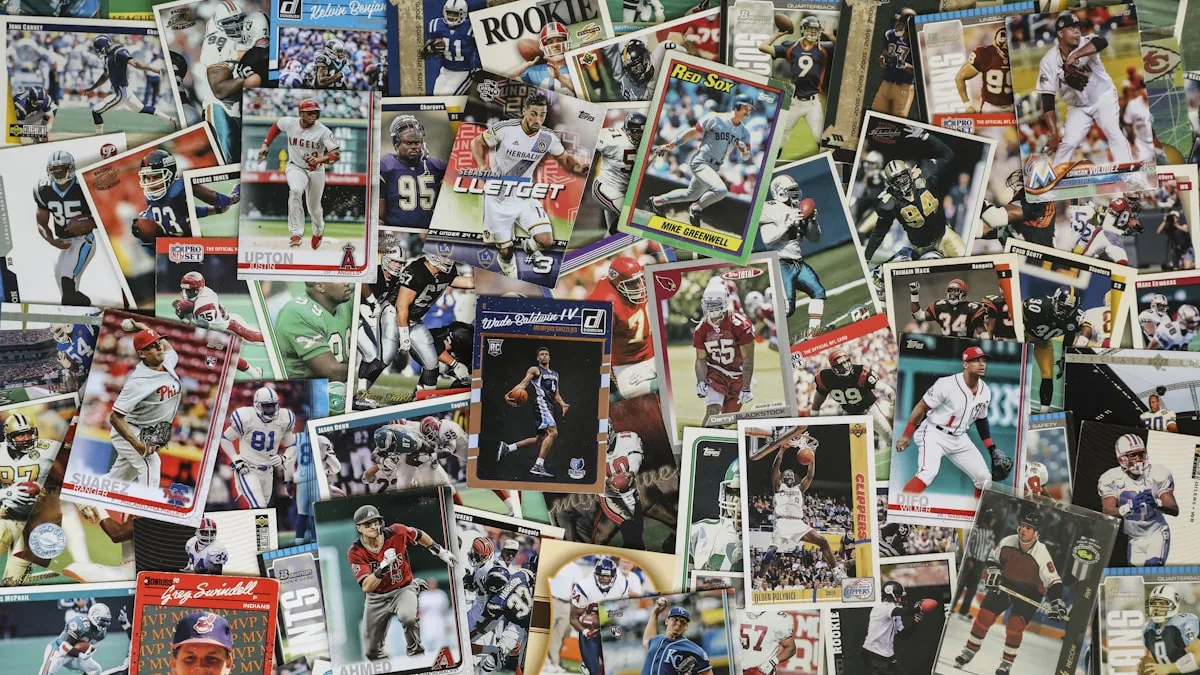
How to Start a Sports Card Flipping Business
The sports card market has exploded. What was once a niche hobby is now a multi-billion dollar industry where savvy collectors and resellers are making serious money. If you're wondering how to start a sports card flipping business, you're looking at one of the most accessible and potentially profitable ventures in the alternative investment space.
The barrier to entry is lower than you might think. You don't need massive capital, a physical storefront, or advanced credentials. What you do need is knowledge, strategy, and the right tools to spot opportunities before everyone else does. In this guide, we'll walk you through everything you need to know to launch and scale your sports card flipping business successfully.
Understanding the Sports Card Market Fundamentals
Before you start sports card flipping business operations, you need to understand what drives value in this market. Unlike stocks or cryptocurrencies, sports cards have tangible appeal—collectors genuinely love these products. But that emotional connection doesn't mean logic goes out the window.
Key factors that determine card value:
Set up a Sports Cards alert on Good Llama
Get verified eBay alerts — 7-day free trial.
- Player performance – Rookie cards and career milestone cards spike when players break records or make All-Star teams
- Rarity – Low print run years, special editions, and error cards command premiums
- Condition – A PSA 9 (Mint) card can be worth 10-50x more than the same card in PSA 6 (Excellent-Mint) condition
- Grading certification – Cards graded by PSA, BGS, or SGC fetch higher prices than raw (ungraded) cards
- Historical significance – Championship seasons, Hall of Fame inductions, and record-breaking performances create lasting value
The most successful people who start sports card flipping business ventures spend months simply studying the market. They follow player news, track price histories, understand which sets are appreciating, and identify seasonal trends. This research phase is your foundation.
Building Your Initial Sports Card Inventory
Starting small and strategic beats starting big and blind. When you start a sports card flipping business, your first goal isn't volume—it's finding undervalued cards with upside potential.
Your sourcing strategy should focus on:
- Estate sales and local collectors – People liquidating collections often don't know current market values
- Bulk lots at below-market rates – Buy collections with mixed cards, extract the valuable ones, and resell the rest
- Grading opportunities – Raw cards in excellent condition can be sent to PSA or BGS, where the certification often increases value by 30-100%
- Seasonal dips – Prices fall in off-seasons; smart flippers buy then and sell during championship season buzz
- Emerging players – Find talented rookies before they explode; buy their cards while they're affordable
Your initial inventory capital doesn't need to be massive. Many successful resellers started with $500-$1,000 and reinvested profits to grow. Focus on quality over quantity. It's better to own 50 carefully selected cards worth $500 than 500 random cards worth the same amount.
Mastering the Grading and Authentication Process
This is where serious money lives. When you start a sports card flipping business with ambitions to scale, understanding grading is non-negotiable.
PSA (Professional Sports Authenticator) is the gold standard. Cards graded 8 or higher command significant premiums. Here's the practical reality:
Grading economics:
- A raw card in PSA 8 condition might cost you $20
- After PSA certification ($15-$30 depending on service tier), that same card might sell for $80-$150
- Your profit margin depends on buying right, choosing the correct grading service, and understanding market demand
Many flippers miss opportunities by either:
- Sending cards to grading that don't justify the cost (cards worth less than $50 rarely pencil out)
- Choosing slower grading tiers that tie up capital for months
- Misjudging which cards will actually appreciate after grading
Start with modern cards from popular players and sets where there's proven demand. Once you understand the economics, branch into vintage cards and niche markets.
Pricing Strategy and Sales Channels
Your profit margin depends entirely on where you buy and where you sell. When you start a sports card flipping business, you'll quickly realize that eBay dominates sports card sales, but it's not your only option.
Primary sales channels:
- eBay – Largest audience, highest visibility, but 12.9% in fees (eBay takes 2.35% + PayPal takes 3.49% + shipping carrier costs)
- Whatnot – Live auction platform gaining traction with collectors; lower fees but requires entertainment value
- Mercari – Growing marketplace for modern cards; 10% fee
- Local card shops – Consignment or direct sales; lower fees but smaller customer base
- Facebook groups and Discord communities – Direct sales to collectors; no fees but requires reputation building
Pricing psychology:
The best flippers price competitively but strategically. Don't just match the lowest price on eBay—analyze sold listings to understand what the market actually pays. Auctions work better for rare or controversial cards; fixed-price works better for straightforward cards with clear market value.
Bundle complementary cards to increase average transaction value. A single card might list for $50; that same card bundled with two others might sell as a lot for $160.
Managing Cash Flow and Scaling Your Operation
Many people who start a sports card flipping business fail not because they pick bad cards, but because they mismanage cash flow. Cards sitting in your inventory aren't money—they're capital at risk.
Critical metrics to track:
- Inventory turnover – How fast cards sell (aim for 30-60 day average)
- Return on investment (ROI) – Include all costs: acquisition, grading, shipping, fees
- Cash burn rate – How much capital you have tied up vs. how much you have liquid
Reinvest profits aggressively early on. If you're making $500 profit per month, put $400 back into inventory and take $100. This accelerates growth dramatically.
Avoid the common trap of "collection creep"—buying cards you genuinely like instead of cards that flip well. Your business isn't a museum; it's a machine for converting knowledge into profit.
Staying Ahead of Market Trends
The sports card market rewards people who stay informed. Subscribe to industry newsletters, follow major collector accounts on social media, and join dedicated forums where serious traders congregate.
What shifts the market:
- Breaking news – Trade rumors, injuries, scandal, or achievement create instant price movements
- Supply changes – Vintage card releases from sealed collections or reprints from manufacturers
- Demographic shifts – New generations discovering different sports or athletes
- Investment trends – When hedge funds or celebrities buy into a player or set, retail prices follow
The most profitable flippers treat this like a business, not a hobby. They study trends, test hypotheses, and pivot when data suggests a market is saturated or declining.
Conclusion: Launch Your Sports Card Flipping Business Today
Starting a sports card flipping business is absolutely achievable. You've learned the fundamentals: understanding market drivers, sourcing strategically, mastering grading economics, pricing intelligently, managing cash flow, and staying ahead of trends.
The path forward is clear. Start with a focused category, learn it deeply, build profit, and reinvest. Scale methodically, not recklessly.
As you're researching deals and building your initial inventory, tools like Good Llama can accelerate your success. Good Llama is an eBay deal alert service that helps serious collectors and resellers discover underpriced sports cards the moment they're listed. Instead of manually searching eBay throughout the day, set up instant alerts for your specific player, set, or condition criteria. Good Llama alerts you immediately—giving you hours or days of advantage before other resellers find the same deals. When you're learning to start a sports card flipping business, that edge is invaluable.
Your sports card flipping business starts now. Research your first category, set your budget, and begin the journey toward building a profitable, sustainable trading card operation.
Word count: 1,247 words
