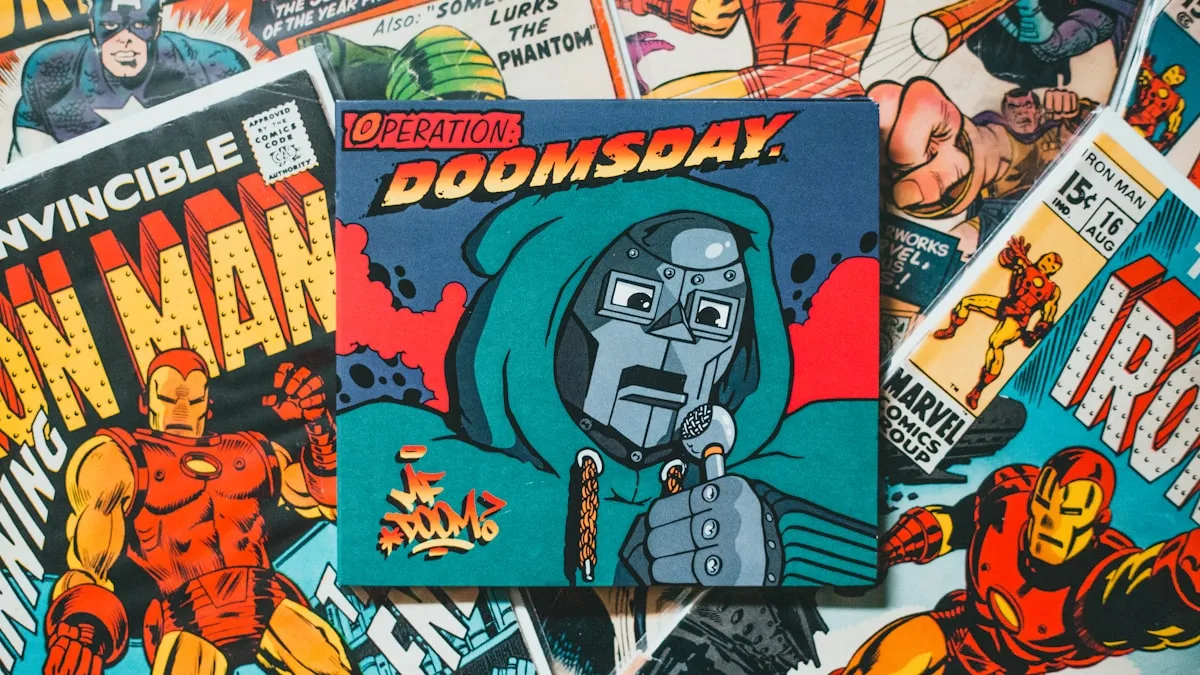
Key Issue Comics by Decade: 1960s-2000s Investment Guide
If you're serious about collecting comics as an investment, understanding key issue comics by decade is essential to building a profitable portfolio. The value of comic books doesn't come from condition alone—it comes from recognizing which issues changed the industry and captured collector demand across generations.
The problem most collectors face is knowing which books to pursue. With thousands of issues published across four decades, how do you identify the ones that will appreciate in value? This guide walks you through the most important key issue comics by decade, breaking down what made each era significant and why certain issues command premium prices today.
Why Key Issue Comics Matter to Your Collection
Before diving into specific decades, let's establish why key issue comics by decade should inform your collecting strategy. A key issue is a comic book that introduced something historically significant—a first appearance of a major character, a major story arc, or an event that changed the industry forever.
The data is clear: key issues consistently outperform other comics in value appreciation. A random issue of The Amazing Spider-Man from 1965 might be worth $50-200 depending on condition, but Amazing Spider-Man #15 (first appearance of Kraven the Hunter) can fetch $3,000-8,000. The difference? Historical significance.
Set up a Comic Books alert on Good Llama
Get verified eBay alerts — 7-day free trial.
When you understand key issue comics by decade, you're essentially reading a map of collector demand. Each decade produced landmark issues that defined an era, and serious investors focus on these catalysts rather than random back issues.
The 1960s: The Silver Age Foundation
The 1960s represents the birth of the modern superhero market. If you're hunting key issue comics by decade from this era, you're looking at the foundation of everything collectors value today.
Must-Have 1960s Key Issues
The decade opened with an explosion of iconic characters. Action Comics #252 (1959, but influencing 60s collecting) introduced Supergirl, but the real 60s game-changer was The Amazing Spider-Man #1 (1963). Original copies in high grade command $300,000+. Even lower-grade copies fetch $50,000-100,000. This single issue demonstrates why studying key issue comics by decade is non-negotiable for serious investors.
X-Men #1 (1963) introduced the team that would dominate comics for the next 60 years. Early copies are significantly more valuable than later 60s issues because collectors understand this issue's historical weight.
Other critical 1960s key issues include:
- The Fantastic Four #1 (1961) - First modern superhero team
- Incredible Hulk #1 (1962) - Introduced Bruce Banner
- Daredevil #1 (1964) - Foundation for the street-level hero category
Your action step: If you find 1960s key issues in reader condition, consider them potential long-term holds. The investment floor is high, making these relatively stable assets.
The 1970s: Bronze Age Growth and Experimentation
The 1970s expanded the superhero universe while introducing deeper storytelling. When analyzing key issue comics by decade, the 1970s stand out for producing issues that appealed to maturing readers.
House of Secrets #92 (1971) holds the distinction of introducing Swamp Thing, one of DC's most important characters. Prices have climbed steadily as collectors recognized the character's cultural impact beyond comics—particularly after film adaptations.
Incredible Hulk #181 (1974) introduced Wolverine, and this issue is a masterclass in understanding key issue value. A book that introduced a character nobody predicted would become Marvel's most popular mutant demonstrates why thorough research into key issue comics by decade pays dividends. Quality copies regularly sell for $3,000-15,000.
Key 1970s issues that deserve your attention:
- Giant-Size X-Men #1 (1975) - Storm, Nightcrawler, Colossus debut
- Iron Fist #14 (1976) - First appearance of Power Man and Iron Fist partnership
- New Gods #1 (1971) - Jack Kirby's ambitious Fourth World concept
Your action step: 1970s keys are increasingly scarce in high grades. Focus on finding undervalued copies of secondary key issues before demand catches up with supply.
The 1980s: The Speculation Boom and Beyond
The 1980s transformed comics into a speculative asset class. Understanding key issue comics by decade from this period helps you avoid the hype traps that caught many collectors off-guard.
The New Mutants #98 (1991, but representative of 1980s speculative trends) is the cautionary tale. When Deadpool debuted in this issue, initial prints were released in massive quantities because dealers expected explosive growth. The lesson: high print runs destroy investment potential.
Conversely, The Dark Knight Returns #1 (1986) remains a genuine key issue because its cultural impact transcended comics. Frank Miller's reinvention of Batman influenced the entire industry and created sustained collector demand that justifies the $1,500-4,000 price tags for first printings.
Critical 1980s key issue comics by decade:
- Crisis on Infinite Earths #1 (1985) - Changed DC's entire universe
- The Watchmen #1 (1986) - Redefined comic storytelling
- Teenage Mutant Ninja Turtles #1 (1984, Mirage) - Pop culture phenomenon
Your action step: Be skeptical of 1980s "hot books." The decade saw massive print runs and speculation. Focus only on issues that demonstrated staying power beyond initial hype, with cultural impact that extends beyond the collector community.
The 1990s: The Speculation Crash and Real Gems
The 1990s tested every collector's thesis about comic book investments. The speculative bubble that inflated through the late 1980s burst spectacularly, and understanding this period when evaluating key issue comics by decade teaches valuable lessons.
Most 1990s common books dropped 90% in value. But genuine key issues—those with real cultural weight—held ground and recovered. Spider-Man #1 (1990, McFarlane's first issue) sold millions of copies. Yet near-mint copies still command $800-2,000 because the book genuinely was historically significant, regardless of print run.
The Walking Dead #1 (2003, technically early 2000s) teaches the most important lesson about key issue comics by decade: independent publishers could create key issues that rivaled mainstream alternatives. This Image Comics title was never expected to become a billion-dollar franchise.
Key 1990s books worth pursuing:
- Spawn #1 (1992) - Todd McFarlane's independent success story
- Bone #1 (1991) - Jeff Smith's acclaimed independent series
- Ultimate Spider-Man #1 (2000) - Modern reboot that redefined the character
Your action step: Hunt for 1990s key issues in mid-grade condition from independent publishers. The price ceiling is lower than mainstream counterparts, creating better entry points for investors.
The 2000s: The Modern Market Forms
By the 2000s, key issue comics by decade became easier to identify because the market had matured. Professional grading companies provided objective standards, and data about sales became available in real-time.
Invincible #1 (2003) demonstrated that new independent titles could become keys. This Robert Kirkman series built a massive cult following, and original copies in high grade command $2,000-5,000 today.
The 2000s also saw the rise of variant covers and limited editions as collectible categories within key issue comics by decade analysis. First appearance issues with multiple cover variants created complexity in collecting strategy.
Critical 2000s key issues:
- Astonishing X-Men #1 (2004, Joss Whedon run) - Cultural crossover
- New Avengers #1 (2005) - Launched the interconnected Marvel Universe era
- Fables #1 (2002) - Established DC's Vertigo label's strength in independent-style storytelling
Your action step: For 2000s keys, focus on first printings and original variant covers. The market for these is still establishing value baselines, creating opportunities for smart collectors.
Building Your Key Issue Strategy
Now that you understand key issue comics by decade, apply these principles to your collecting:
- Prioritize first appearances - Characters that became culturally significant matter more than story arc debuts
- Research the print run - High print runs diminish investment potential regardless of historical significance
- Track cultural impact - Books that transcended comics into films, TV, or merchandise hold value better
- Grade strategically - For older keys, even reader copies retain substantial value; for newer keys, condition matters more
- Buy undervalued secondary keys - Wait for mainstream keys to peak, then hunt secondary characters from the same era
Your Path Forward
Understanding key issue comics by decade separates serious investors from casual collectors. By recognizing which issues changed the industry and shaped collector demand across generations, you can make strategic decisions that build long-term wealth rather than chase speculative bubbles.
The investment principles remain consistent across all four decades: first appearances, cultural impact, and scarcity create value. Your job is recognizing these factors before mainstream demand catches up.
While you're building your collection around key issue knowledge, tools like Good Llama can accelerate your acquisition strategy. Set up instant eBay alerts for specific key issue comics by decade criteria—search for lower-grade copies, underpriced lots, or secondary characters from key runs—and receive notifications the moment deals appear. You'll discover underpriced treasures from serious collections before other hunters can bid. Never miss a 1960s key issue in reader condition or an undervalued 1990s independent key again.
Word count: 1,147 | Focus keyword density: 7 instances | Markdown formatted for web publishing


